
The Great Streaming Purge of 2022
“As we work toward bringing our content catalogs together under one platform, we will be making changes to the content offering available on both HBO Max and Discovery+. That will include the removal of some content from both platforms.”
That was the statement given by Warner Bros. Discovery after they announced that they would be combining the streaming services HBO Max and Discovery+ into a single, unified platform. Alongside this announcement, however, was a list of casualties- shows and movies that would be removed from the new service entirely. Many of these were family-friendly, animated shows such as:
- Infinity Train
- Mao Mao, Heroes of Pure Heart
- Mighty Magiswords
- OK K.O!- Let’s Be Heroes
- Summer Camp Island
To make matters worse, many of the creators of these shows were not made aware of the removal of their work and were left confused and upset as it suddenly disappeared. For many of them, all they could think was this:
Why?
Well, there are a few reasons, but one explanation seems to be the most popular.

Mind you, this isn’t the only reason. Shifting focus away from family-friendly shows and wanting to clean up rarely-watched content have also been cited as motives. But the cold truth is that by cutting these shows, Warner Bros. Discovery cuts out the expenses owed to the crews who worked on them. At the end of the day, this is just a massive business move: one that could save the company millions of dollars.
This isn’t the first time something like this has happened- Netflix in particular has gotten a bit of a reputation for cancelling anticipated projects, such as an animated series based on the Bone comics by Jeff Smith. Smith’s case is especially tragic, however, as he’s been trying to adapt his comics for years; first with Nickolodeon, then (ironically) with Warner Brothers, and then finally with Netflix, as depicted in this comic:
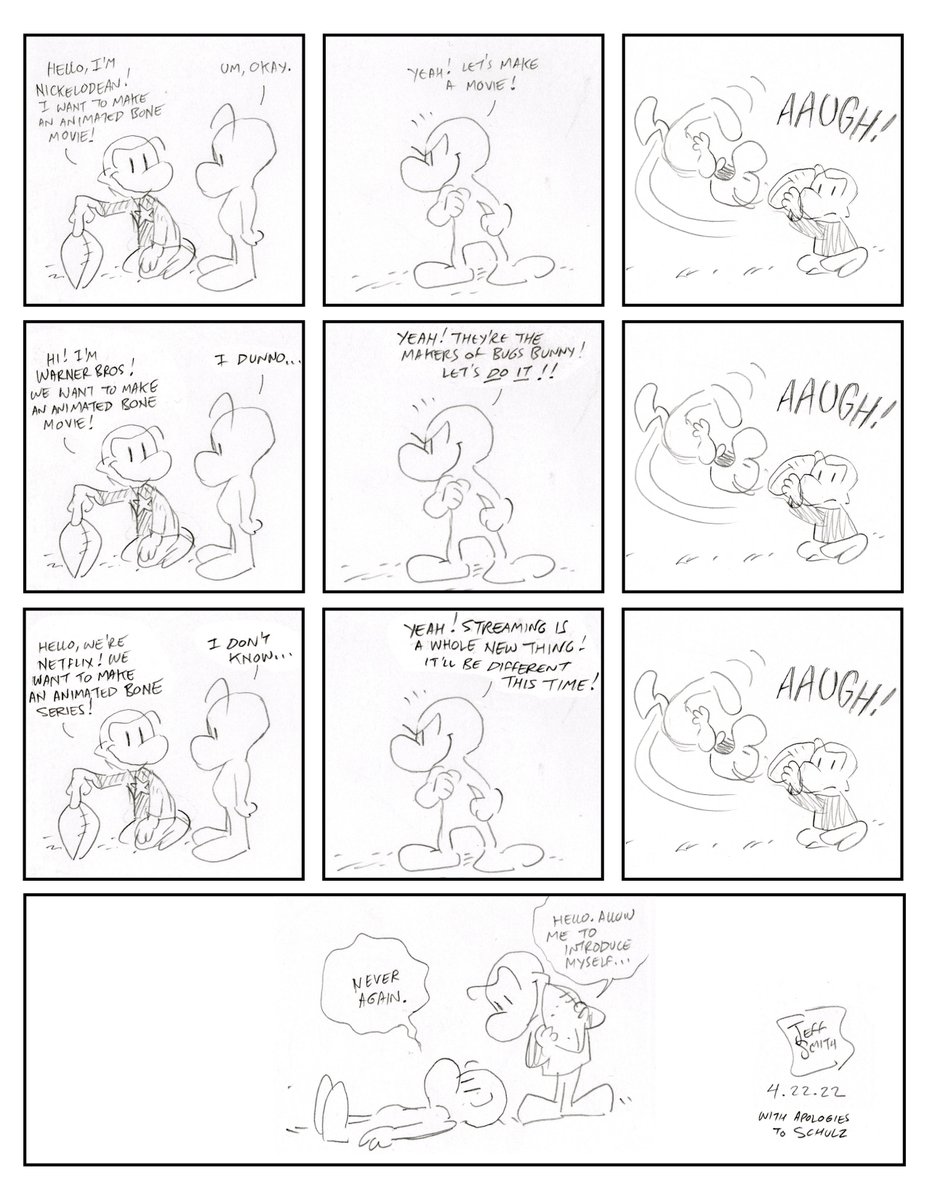
Though Smith was able to make light of a frustrating situation, between this and the HBO Max/Discovery + merger, it’s becoming clear how much creators rely on the platforms that host their content. Artists who want to reach a large audience through Hollywood or TV or streaming need the aid of the companies who run those movie studios and TV stations and streaming platforms. They have to place their creative work- something they have a great passion for- into the hands of outside parties for a chance at their work being seen. A lot of faith has to be put in these companies, as once they have the rights to a creative work, they can just as quickly pull the plug. And based on recent trends, that faith may not survive much longer.
An Infinitely Painful Trainwreck
The creator of Infinity Train, Owen Dennis, shared his thoughts on the matter. His words illustrate just how horrible of a situation it is to watch your work be treated like a product that can be pulled from shelves:
“What is the point of making something, spending years working on it, putting in nights and weekends doing their terrible notes, losing sleep and not seeing our families, if it’s just going to be taken away and shot in the backyard? It’s so incredibly discouraging and they’re definitely not going to be getting their best work out of whoever decides to stay. We’re working at the intersection of art and commerce, but the people in charge have clearly forgotten that they’ll have no commerce without the art.”
By having a fully business mindset, the people who are in control of these platforms forget that behind every show or movie is a team of people that worked to create it. There are artists who had pooled their passions together to make something that they could be proud of only for it to be taken away without any warning. This whole debacle has truly shaken people’s trust in the platforms that hosts creative works. These platforms are meant to aid creators and help their work reach an audience. If things keep going in this direction, then it may become hard for artists to believe that platforms will hold up their end of the deal.
What About The Little Guy?
Mind you, all the voices we’ve heard from are those of established artists: show runners, animators in the industry, published comic artists, etc. etc. This situation can be just as discouraging- just as terrifying– for smaller creators (like yours truly).
Small creators often live and die by the platforms their work is hosted on. Without resources and an already established audience, we depend more than ever on the owners of sites such as YouTube, Tumblr, and Twitter so our work can reach… anybody. We’re bound by the terms of the website, and our work can be pulled at a moment’s notice. YouTube in particular has an issue with false DMCA claims that can be used to take down content someone doesn’t like. And if you don’t have enough eyes on your work or enough voices to cry out in protest? There isn’t much you can do to salvage it.
The easiest way to circumvent this, of course, is to create your own platform where you don’t have to answer to anyone but yourself. This is what I’ve done here- this domain is mine, this website is mine, these posts are mine. The problem is that, if you don’t use any other platform to raise awareness, very few are even going to know that your site exists. You need a megaphone to make your voice heard. Without one, you’re just one voice among millions.
So all of this has been awfully discouraging for me. I don’t want to be in the situation of people like Smith or Dennis who have their work taken away from them. But with how massive the web is, I have no choice but to play along. I want things to be different. I want to be able to post my art without worrying that I’ll wake up the next day to see everything is gone. I’m hoping that, with the outcry the HBO Max debacle caused, platforms will be more considerate and careful when dealing with the content they host. But if things don’t change, if people can’t trust these platforms, we’re just living in a house built on a weak foundation.
–Eliza
1 thought on “Built on a Weak Foundation”